
What is Commercial HVAC?
Every commercial building depends on a reliable heating, ventilation, and air conditioning system to maintain a comfortable, healthy, and productive environment. Whether it's an office building, retail store, hospital, warehouse, restaurant, school, or manufacturing facility, HVAC systems play a critical role in daily operations. Unlike residential systems, commercial HVAC equipment is designed to serve larger spaces, accommodate more occupants, and handle greater operational demands.
If you're planning to build a new commercial property, renovate an existing facility, or replace outdated equipment, understanding how commercial HVAC systems work is essential. Knowing the basics can help you make smarter investment decisions, improve energy efficiency, and reduce long-term operating costs.
What Does Commercial HVAC Mean?
Commercial HVAC refers to heating, ventilation, and air conditioning systems specifically engineered for commercial, industrial, and institutional buildings. These systems regulate indoor temperature, humidity, ventilation, and air quality across much larger spaces than residential equipment.
While the primary purpose remains the same—keeping occupants comfortable—the design, installation, and maintenance of commercial HVAC systems are significantly more complex.
Commercial buildings often contain multiple floors, different occupancy zones, specialized ventilation requirements, and equipment that generates substantial heat. HVAC systems must be capable of maintaining consistent comfort while operating efficiently under continuous demand.
How Is Commercial HVAC Different from Residential HVAC?
Many people assume commercial HVAC systems are simply larger versions of residential units. In reality, the differences extend far beyond equipment size.
Commercial systems are designed to:
- Serve multiple rooms or entire buildings
- Operate for extended hours every day
- Support hundreds or even thousands of occupants
- Provide customized temperature control for different zones
- Integrate with advanced building automation systems
- Meet stricter building codes and ventilation standards
Residential systems typically focus on maintaining comfort in a single home, while commercial systems must balance comfort, energy efficiency, indoor air quality, equipment reliability, and business continuity.
Main Components of a Commercial HVAC System
Commercial HVAC systems include numerous interconnected components that work together to create a controlled indoor environment.
Heating Equipment
Heating may be provided by:
- Gas furnaces
- Boilers
- Heat pumps
- Electric heating systems
- Rooftop packaged units
The ideal solution depends on the building's size, climate, occupancy, and energy requirements.
Cooling Equipment
Cooling systems commonly include:
- Air conditioners
- Chillers
- Cooling towers
- Variable refrigerant flow (VRF) systems
- Packaged rooftop units
These systems remove excess heat while controlling humidity levels throughout the building.
Ventilation System
Proper ventilation is one of the most important aspects of commercial HVAC.
Ventilation systems introduce fresh outdoor air while removing stale indoor air, odors, airborne contaminants, and excess moisture. Effective ventilation contributes to healthier indoor air quality and helps businesses comply with local building codes.
Air Distribution
Conditioned air is delivered through:
- Ductwork
- Air handlers
- Supply and return vents
- Variable air volume (VAV) boxes
- Diffusers
Well-designed air distribution ensures consistent temperatures throughout every occupied space.
Types of Commercial HVAC Systems
Different commercial properties require different HVAC solutions.
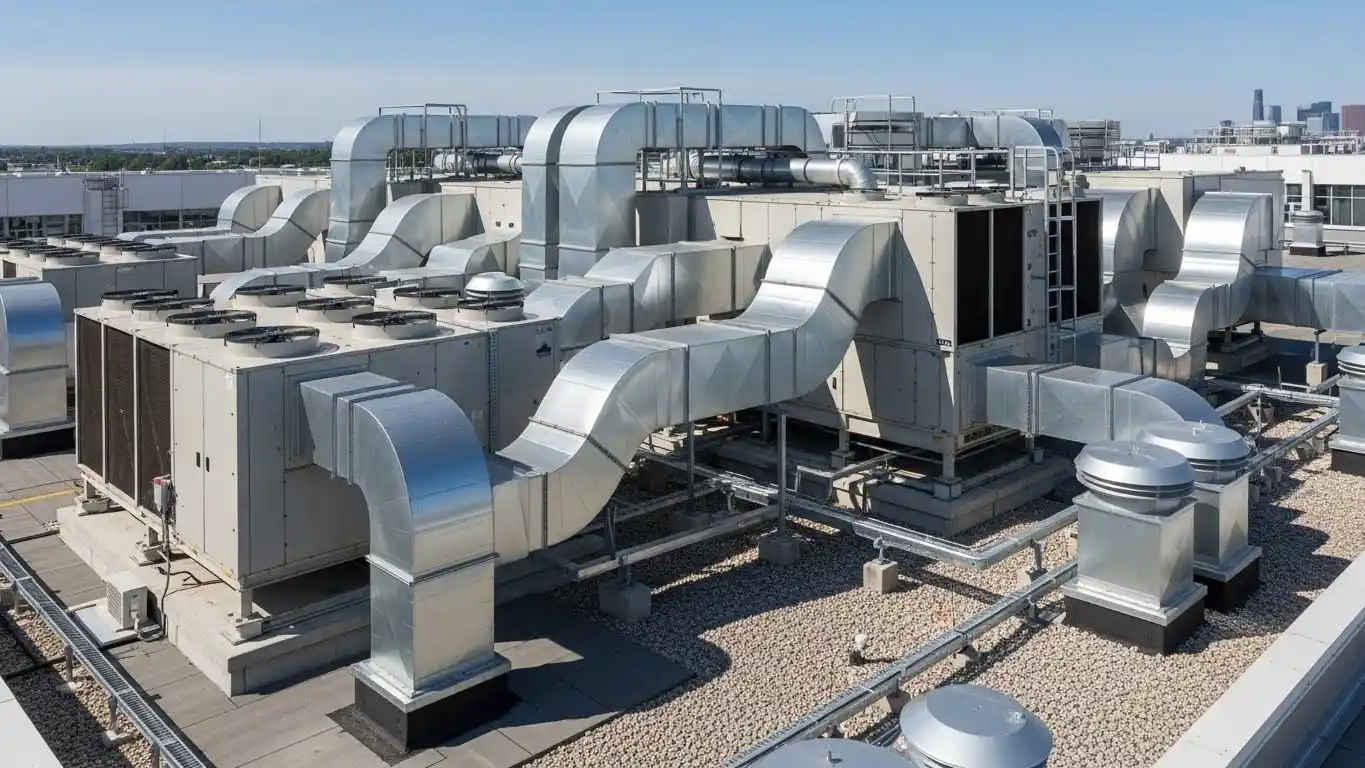
Rooftop Units (RTUs)
Rooftop units are among the most common commercial HVAC systems.
These self-contained systems combine heating and cooling components into one package installed on the roof, saving valuable indoor space while simplifying maintenance.
RTUs are widely used in offices, shopping centers, schools, and retail stores.
Variable Refrigerant Flow (VRF) Systems
VRF technology allows individual temperature control in multiple areas of a building.
Instead of heating or cooling the entire property equally, each zone receives only the conditioning it needs, improving comfort and reducing energy consumption.
VRF systems are popular in hotels, medical facilities, and modern office buildings.
Chilled Water Systems
Large commercial buildings often use chilled water systems to provide cooling across multiple floors.
These systems circulate chilled water through air handlers, making them highly efficient for hospitals, universities, and high-rise office buildings.
Heat Pumps
Commercial heat pumps provide both heating and cooling using electricity rather than separate heating equipment.
Many businesses choose heat pumps because of their energy efficiency and lower operating costs.
Why Commercial HVAC Is So Important
A properly functioning HVAC system directly impacts every aspect of building performance.
Employee Productivity
Comfortable employees tend to work more efficiently.
Poor temperature control, inadequate ventilation, or inconsistent airflow can reduce concentration, increase fatigue, and negatively affect workplace satisfaction.
Customer Experience
For retail stores, restaurants, hotels, and entertainment venues, indoor comfort influences customer satisfaction.
A building that's too hot or too cold may discourage customers from staying longer or returning in the future.
Equipment Protection
Many commercial facilities contain expensive electronics, servers, medical equipment, or manufacturing machinery.
Maintaining proper temperature and humidity helps protect these valuable assets from overheating and moisture-related damage.
Indoor Air Quality
Modern commercial HVAC systems improve indoor air quality by filtering airborne particles, controlling humidity, and increasing ventilation.
Better indoor air contributes to healthier workplaces and may reduce employee absenteeism.
Energy Efficiency Matters
Energy costs represent one of the largest operating expenses for many commercial properties.
Older HVAC equipment often consumes significantly more electricity than modern high-efficiency systems.
Today's systems incorporate advanced technologies such as:
- Variable-speed compressors
- Smart thermostats
- Building automation systems
- Energy recovery ventilators
- High-efficiency motors
- Occupancy-based controls
These innovations reduce energy consumption while maintaining consistent indoor comfort.
Many businesses recover their investment through lower monthly utility bills over the life of the equipment.
The Importance of Preventive Maintenance
Installing a high-quality HVAC system is only the beginning.
Without routine inspections, cleaning, filter replacement, and system adjustments, even the best equipment gradually loses efficiency.
Preventive maintenance helps:
- Reduce operating costs
- Prevent unexpected breakdowns
- Extend equipment lifespan
- Improve indoor air quality
- Maintain manufacturer warranty coverage
- Maximize energy efficiency
Scheduled maintenance also allows technicians to identify minor issues before they become expensive emergency repairs.
Choosing the Right Commercial HVAC Contractor
Commercial HVAC projects require specialized expertise.
An experienced contractor performs detailed building load calculations, evaluates ventilation requirements, recommends properly sized equipment, and ensures compliance with all local codes.
Professional installation directly affects system efficiency, reliability, operating costs, and long-term performance.
Working with qualified HVAC specialists also ensures the project stays on schedule and minimizes disruptions to business operations.
Modern Commercial HVAC Solutions for Every Industry
Every commercial property has unique heating and cooling requirements. A warehouse has very different needs than a healthcare facility, while a restaurant demands entirely different ventilation than an office building.
This is why businesses increasingly invest in customized commercial HVAC solutions tailored to their specific operations, occupancy levels, and energy goals. Properly engineered systems improve comfort, reduce utility costs, enhance indoor air quality, and provide dependable performance for years to come.
Whether you're managing a small retail space or a large multi-story facility, selecting the right HVAC solution can significantly impact both operating expenses and occupant satisfaction.

Commercial HVAC systems are much more than heating and cooling equipment—they are essential infrastructure that supports employee productivity, customer comfort, energy efficiency, and business success. From rooftop units and VRF systems to advanced automation and ventilation technologies, today's commercial HVAC solutions are designed to meet the demands of modern buildings.
At Atlantic HVAC, we help businesses choose, install, maintain, and upgrade commercial HVAC systems that deliver reliable performance in every season. Whether you're constructing a new facility, replacing aging equipment, or improving energy efficiency, our experienced professionals provide customized solutions designed to maximize comfort, minimize operating costs, and protect your investment for years to come.