
Cooling Tower Maintenance checklist
Cooling towers play an important role in many commercial and industrial HVAC systems. They help remove heat from water used in air conditioning and process cooling, allowing large buildings and facilities to maintain stable operating temperatures.
Because cooling towers operate with water, airflow, fans, pumps, and mechanical components, they require regular attention. Dirt, scale, corrosion, biological growth, worn belts, poor water treatment, and restricted airflow can gradually reduce system performance. If these problems are ignored, they may lead to higher energy consumption, equipment damage, or unexpected downtime.
A consistent maintenance routine helps identify developing issues early and keeps the cooling tower operating as efficiently as possible.
Why cooling Tower Maintenance matters
A cooling tower continuously works in an environment where moisture and outdoor contaminants can affect its components. Minerals in the water can accumulate on heat-transfer surfaces, while leaves, dust, and debris can restrict airflow.
At the same time, fans, motors, bearings, belts, pumps, and other mechanical components experience regular wear.
Without proper maintenance, a cooling tower may gradually lose its ability to reject heat. The HVAC system then has to work harder to maintain the required temperature, which can increase energy consumption and operating costs.
Regular maintenance helps protect the equipment, improve reliability, and extend the service life of the cooling tower.
1. Perform a cooling Tower System inspection
A thorough cooling tower system inspection should be the starting point of any maintenance program.
Technicians should examine the overall condition of the tower and look for visible signs of corrosion, leaks, damage, unusual vibration, debris accumulation, and other abnormalities.
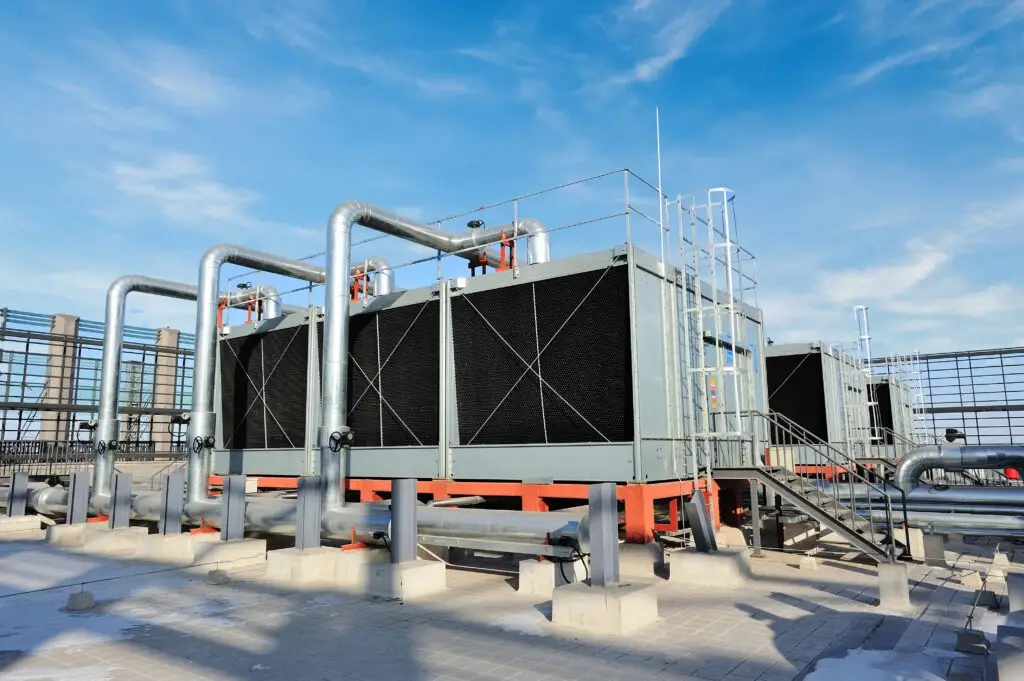
The inspection should include the tower basin, fill material, drift eliminators, spray nozzles, fans, motors, belts, pumps, piping, valves, and water distribution components.
The goal is not simply to identify obvious damage. A professional inspection should also look for early signs of wear or declining performance that may become more serious if left untreated.
2. Inspect and clean the basin
The cooling tower basin collects and distributes water throughout the system. Dirt, sediment, leaves, scale, and other debris can accumulate in this area over time.
A dirty basin can interfere with water circulation and contribute to clogged strainers, pumps, and distribution components.
During maintenance, the basin should be inspected for sediment buildup, corrosion, leaks, and damaged components. Cleaning should be performed as needed to maintain proper water circulation.
Any unusual accumulation should also be investigated because it may indicate problems with filtration or water treatment.
3. Check water quality
Water quality is one of the most important aspects of cooling tower maintenance.
As water evaporates, minerals and dissolved solids can become concentrated. Without proper treatment, this can lead to scale formation and corrosion.
Poor water quality may also create conditions that encourage biological growth. For this reason, commercial cooling towers typically require a water treatment program appropriate for the equipment and operating environment.
Water chemistry should be monitored according to the system's requirements. Professional service can help identify whether treatment, filtration, blowdown, or other corrective measures are necessary.
4. Inspect the fill material
Fill material increases the surface area available for heat transfer. If the fill becomes clogged with dirt, scale, or biological deposits, water and airflow may not move through it effectively.
Damaged or heavily contaminated fill can reduce the tower's ability to reject heat.
Technicians should inspect the fill for blockages, deterioration, deformation, and excessive buildup. Cleaning or replacement may be necessary when the material can no longer provide effective performance.
5. Check spray nozzles and water distribution
Cooling towers depend on proper water distribution. Spray nozzles need to distribute water evenly across the fill material.
Clogged or damaged nozzles can create dry areas and reduce heat-transfer efficiency. Uneven water distribution may also cause some sections of the tower to work harder than others.
During maintenance, technicians should inspect nozzles for blockages, damage, and uneven spray patterns. Cleaning or replacing affected components can help restore proper water distribution.
6. Inspect fans and motors
Fans are essential for moving air through the cooling tower. Problems with the fan or motor can quickly affect overall cooling performance.
Maintenance should include checking fan blades, motors, shafts, bearings, and mounting components. Technicians should look for excessive vibration, unusual sounds, overheating, and signs of mechanical wear.
A fan that is out of balance can create vibration that places additional stress on bearings, shafts, and other components.
Identifying these issues early can help prevent more expensive mechanical failures.
7. Check belts and pulleys
Cooling tower fan drives often rely on belts and pulleys. These components experience continuous mechanical stress and can wear over time.
Belts should be inspected for cracking, fraying, glazing, stretching, or other signs of deterioration. Proper tension is also important. A loose belt can slip and reduce fan speed, while excessive tension can put unnecessary stress on bearings and motors.
Pulleys should be checked for alignment and wear. Replacing worn belts before they fail can help prevent unexpected equipment shutdowns.
8. Inspect bearings and lubrication
Bearings support rotating components and require appropriate lubrication and inspection.
Insufficient lubrication, contamination, or normal wear can increase friction and produce heat or unusual noise. If a bearing begins to fail, vibration may increase and damage other mechanical components.
Maintenance personnel should follow the manufacturer's recommendations for lubrication intervals and procedures. Over-lubrication can also cause problems, so more lubricant is not necessarily better.
9. Check drift eliminators
Drift eliminators help reduce the amount of water droplets carried out of the cooling tower with the exhaust air.
Damaged or improperly installed drift eliminators can reduce system efficiency and increase water loss.
During routine maintenance, technicians should inspect these components for cracks, deformation, excessive buildup, or displacement. Any damaged sections should be repaired or replaced as appropriate.
10. Inspect piping, valves and connections
Leaks can waste water and indicate a developing mechanical problem.
Pipes, valves, connections, pumps, and seals should be inspected for visible leaks, corrosion, damage, and unusual wear. Small leaks should not be ignored simply because they do not appear serious.
Over time, water exposure can contribute to corrosion and deterioration. Early repairs are generally easier and less disruptive than addressing a major leak after significant damage has occurred.
11. Monitor vibration and unusual noise
Changes in sound or vibration can provide an early warning of mechanical problems.
A cooling tower that suddenly becomes louder or develops unusual vibration may have a problem with the fan, motor, bearings, belts, shaft, or another rotating component.
Technicians can compare current operating conditions with normal system performance and investigate abnormal readings or symptoms.
Addressing vibration early can prevent damage from spreading to other components.
12. Keep the area around the Tower Clear
The area surrounding the cooling tower should be kept free from unnecessary obstructions.
Leaves, trash, construction materials, vegetation, and stored equipment can restrict airflow or become drawn into the tower. Nearby objects can also make service and inspection more difficult.
Adequate clearance allows air to move properly and gives technicians safe access to the equipment.
Seasonal Cooling Tower maintenance
Cooling tower maintenance should not be treated as a once-a-year task. The exact schedule depends on the equipment, operating conditions, water quality, environment, and manufacturer's recommendations.
Before the cooling season, the system should receive a detailed inspection and service. During operation, water quality, mechanical components, temperatures, vibration, and overall performance should be monitored.
At the end of the season, another inspection can help identify problems that should be corrected before the equipment is placed back into service.
Professional maintenance helps prevent costly problems
A cooling tower is part of a larger HVAC system, so problems in the tower can affect the performance of chillers, pumps, controls, and other equipment.
Regular maintenance provides an opportunity to catch small issues before they cause larger failures. It can also help maintain heat-transfer efficiency, reduce unnecessary energy consumption, and extend equipment life.
Atlantic Mechanical LLC provides commercial HVAC maintenance and service for businesses throughout New York. Professional technicians can inspect cooling tower components, identify developing problems, and recommend maintenance or repairs based on the actual condition of the system.
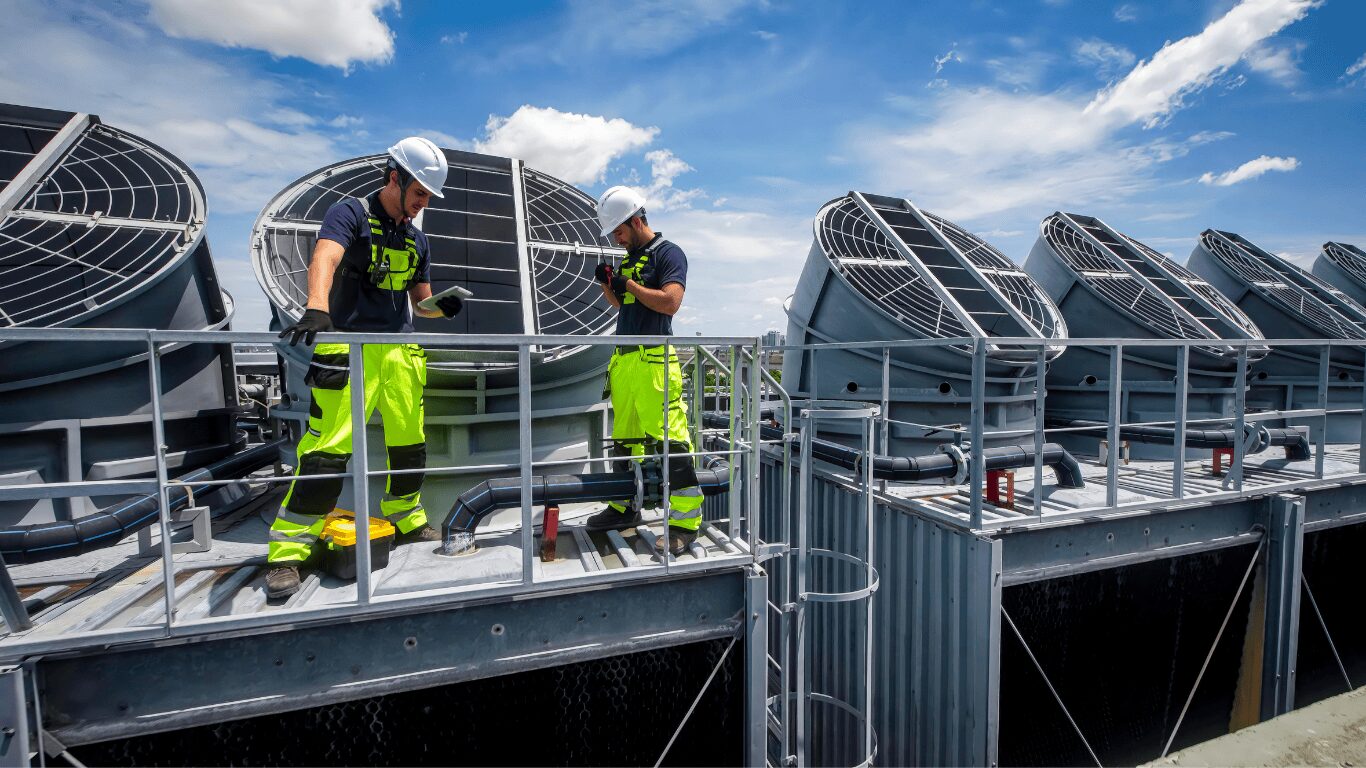
A cooling tower maintenance program should cover more than basic cleaning. Basin condition, water quality, fill material, spray nozzles, fans, motors, belts, bearings, drift eliminators, piping, valves, and overall system performance all deserve attention.
A detailed cooling tower system inspection helps create a clear picture of the equipment's condition and makes it easier to address problems before they become expensive emergencies.
For commercial properties that depend on cooling towers, proactive maintenance is an investment in reliability. Regular inspections and timely repairs can help keep the HVAC system operating efficiently, reduce unexpected downtime, and provide dependable cooling throughout the season.