
Best HVAC Systems for commercial buildings
Choosing an HVAC system for a commercial building is not as simple as selecting equipment with enough heating and cooling capacity. Offices, restaurants, retail stores, warehouses, hotels, and other commercial properties have different layouts, occupancy levels, operating schedules, and ventilation requirements. The right system should match the way a building is actually used.
A well-designed commercial HVAC system can provide consistent indoor comfort, improve energy efficiency, support better air quality, and reduce the risk of costly breakdowns. On the other hand, equipment that is poorly sized or unsuitable for the property may consume excessive energy and struggle to maintain comfortable temperatures.
Atlantic Mechanical LLC helps businesses throughout New York select, install, replace, and maintain HVAC systems designed around the specific requirements of their commercial properties.
What makes a good commercial HVAC System?
The best HVAC system is not necessarily the most powerful or expensive option. It is the one that provides reliable performance while matching the building's actual heating, cooling, ventilation, and control needs.
Several factors should be considered before choosing equipment:
- Building size and layout
- Number of employees, customers, or occupants
- Operating hours
- Insulation and building envelope
- Window area and solar heat gain
- Internal heat from lighting and equipment
- Ventilation requirements
- Available electrical or gas infrastructure
- Energy-efficiency goals
- Maintenance requirements and long-term operating costs
A professional load calculation and site assessment can help determine the appropriate equipment capacity. Oversized systems may cycle on and off too frequently, while undersized units can run continuously without maintaining the desired temperature.
Rooftop HVAC Systems
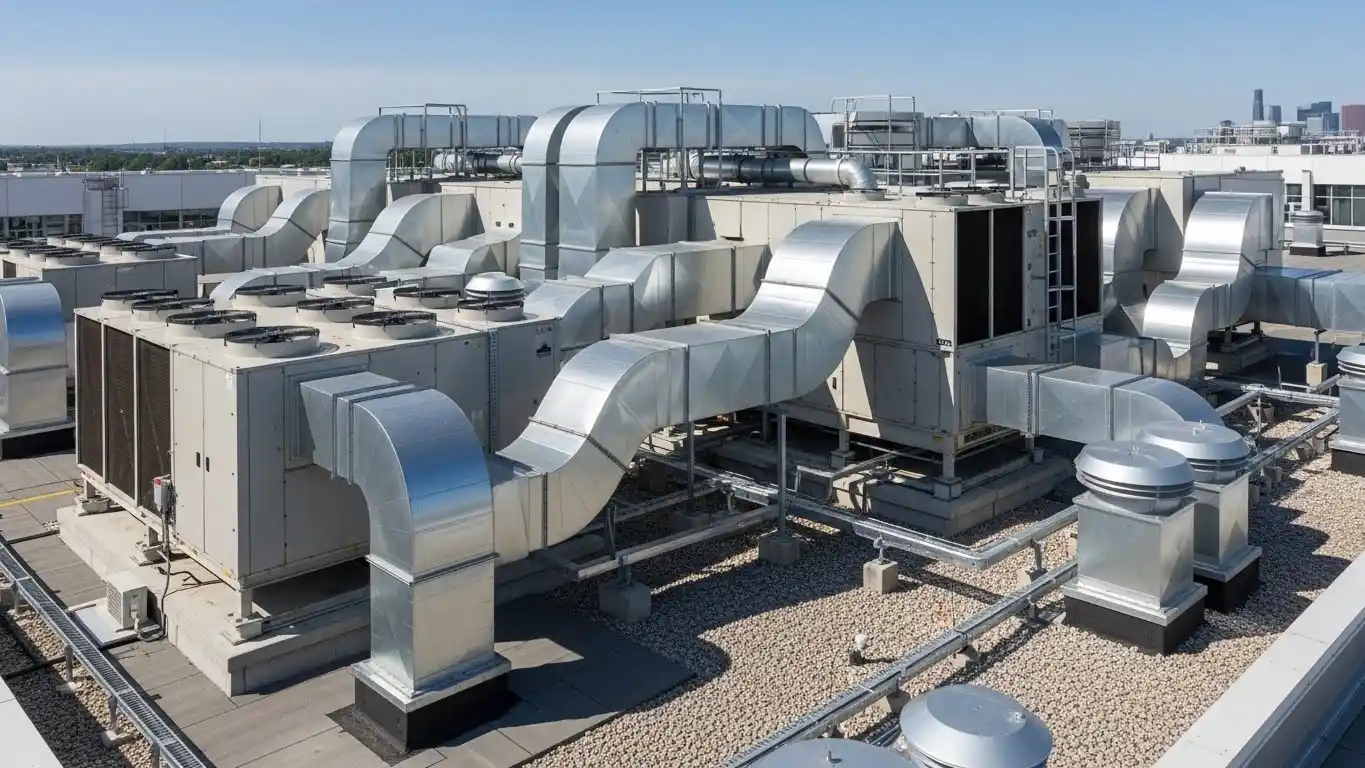
Rooftop units are one of the most common HVAC solutions for commercial buildings. As the name suggests, the equipment is installed on the roof, which keeps major components outside the occupied space.
This configuration is particularly useful for offices, retail buildings, restaurants, and other properties where interior floor space is valuable. Rooftop equipment can provide heating, cooling, and ventilation through a centralized system connected to the building's ductwork.
Another advantage is accessibility. Technicians can often perform service on the roof without disrupting customers or employees inside the building.
However, rooftop equipment must be correctly sized and installed. Roof conditions, access, ductwork, drainage, electrical connections, and weather exposure all need to be considered during installation.
Split HVAC Systems
Commercial split systems can be a practical choice when a building needs flexible heating and cooling without a large packaged rooftop unit.
A typical split system consists of indoor and outdoor components connected by refrigerant lines. Depending on the project, multiple indoor units or zones can be used to provide more precise temperature control.
This approach can work well for smaller commercial properties, offices, additions, and individual zones within larger buildings. It may also be useful when the building's structure or roof does not make a rooftop installation practical.
The right configuration depends on the size and layout of the property, existing infrastructure, and desired level of zoning.
Variable refrigerant flow systems
Variable refrigerant flow, or VRF, systems are designed to provide highly flexible temperature control across multiple zones.
A VRF system can simultaneously serve different areas of a building based on their individual heating and cooling requirements. This makes the technology particularly attractive for buildings with many rooms or areas that have different temperature needs.
For example, a commercial property may have offices facing different directions, conference rooms with variable occupancy, and common areas with completely different cooling demands. Instead of treating the entire building as one zone, VRF technology allows greater control over individual spaces.
These systems can be an excellent option for larger offices, hotels, mixed-use buildings, and other properties where zoning and energy management are priorities.
Packaged HVAC Systems
Packaged systems combine major HVAC components into a single cabinet. Depending on the model, they can provide heating, cooling, and ventilation from one piece of equipment.
This configuration simplifies installation and can be an effective solution for many commercial buildings. Packaged equipment is available in different capacities, making it suitable for various property sizes.
Because all major components are integrated, maintenance and service can also be more straightforward. However, the system still needs to be selected according to the building's actual load and ventilation requirements.
Retail HVAC Systems
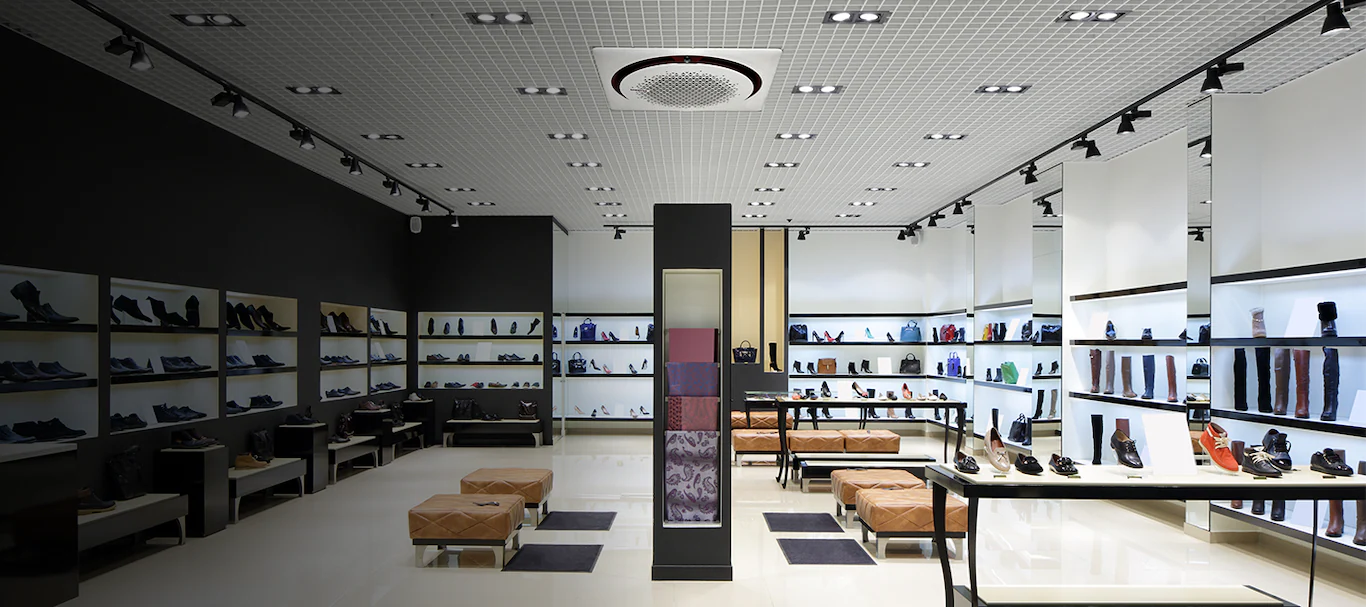
Retail properties present unique HVAC challenges. Customers enter and leave frequently, exterior doors may remain open during busy periods, and large windows can create additional heat gain from sunlight.
Retail HVAC systems need to maintain comfortable conditions even when occupancy and outdoor conditions change throughout the day.
For larger stores, zoning can be especially useful. Sales floors, fitting rooms, storage areas, offices, and employee spaces may have different heating and cooling requirements. Separate control zones can prevent the system from conditioning every part of the building in exactly the same way.
The placement of supply and return air also matters. Poor airflow distribution can create hot or cold spots that affect both customers and employees.
HVAC Systems for Restaurants
Restaurants require careful HVAC planning because the dining area and kitchen have very different environmental conditions.
Cooking equipment generates significant heat and moisture, while commercial kitchens require specialized exhaust and makeup air systems. The dining area, meanwhile, needs stable temperatures, good ventilation, and comfortable airflow.
The HVAC system should be designed together with kitchen ventilation. If exhaust air is removed without sufficient replacement air, the building can develop pressure problems that affect comfort and system performance.
A properly designed restaurant HVAC system helps separate kitchen conditions from the dining environment while maintaining effective ventilation throughout the property.
HVAC for Office Buildings
Office buildings generally prioritize comfort, indoor air quality, energy efficiency, and precise temperature control.
Occupancy can vary significantly throughout the day. Conference rooms may suddenly become crowded, while individual offices may remain lightly occupied. A single temperature setting for the entire building may therefore be inefficient.
Zoned HVAC systems, programmable controls, smart thermostats, and modern variable-speed equipment can help match system operation to actual demand.
Regular maintenance is equally important. Even a highly efficient system can lose performance when filters are clogged, coils become dirty, or controls are not functioning correctly.
Energy efficiency should be part of the decision
Initial equipment cost is only one part of the total HVAC investment. Commercial property owners should also consider energy consumption, maintenance, expected service life, and potential repair costs.
High-efficiency equipment can reduce operating expenses over time, especially in buildings that require heating and cooling for long periods. Variable-speed motors and advanced controls can further improve performance by allowing the system to adjust output instead of constantly operating at full capacity.
Energy efficiency should, however, be considered together with the building's actual needs. Installing expensive technology without appropriate system design will not automatically produce better results.
Why proper HVAC sizing matters
One of the most common mistakes in commercial HVAC projects is selecting equipment based only on the building's square footage.
Two buildings with the same floor area can have completely different HVAC requirements. A store with large windows and frequent door openings may need a different system from an insulated office with limited occupancy.
Professional HVAC contractors consider multiple factors when determining capacity. Proper sizing helps the system operate efficiently, maintain stable temperatures, and avoid unnecessary wear caused by short cycling or continuous operation.
Installation is just as important as equipment selection
Even the best HVAC equipment can perform poorly when installation is rushed or improperly planned.
Ductwork must be correctly designed, refrigerant lines installed according to manufacturer specifications, electrical connections completed safely, and controls configured properly. Equipment also needs adequate clearance for service and maintenance.
Commissioning after installation is important as well. Technicians should verify airflow, temperature performance, controls, and overall operation before the system is placed into regular service.
There is no single HVAC system that is perfect for every commercial property. The best choice depends on the building, its purpose, budget, energy goals, and expected operating conditions.
A professional evaluation can help determine whether a rooftop unit, split system, VRF configuration, packaged system, or another solution is appropriate.
Atlantic Mechanical LLC provides commercial HVAC installation, replacement, repair, and maintenance services for businesses throughout New York. From retail stores and restaurants to office buildings and larger commercial facilities, the company focuses on practical HVAC solutions designed for reliable performance.
The right commercial HVAC system should do more than keep a building comfortable. It should work efficiently, respond to changing demand, remain serviceable, and support the way the business operates every day. With professional design and installation, a commercial HVAC investment can provide dependable comfort and performance for years to come.